
Roofing
Three Roof Types, Three Completely Different Loads
A tile roof and a shingle roof of identical size produce loads that differ enormously in weight. Picking the container by roof area alone is how people end up with a box that cannot be lifted.
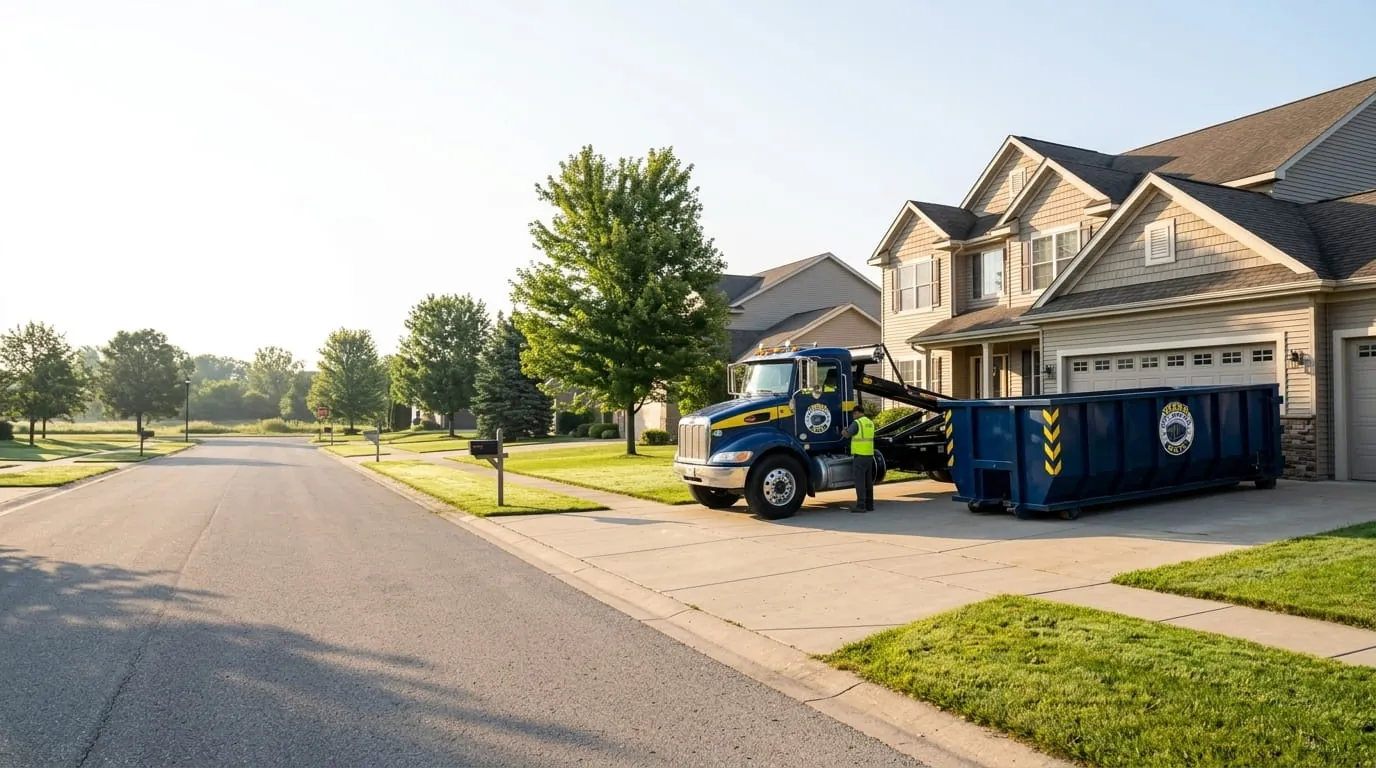
⭐ Why roof type decides everything
Roofing is the one job where sizing by area is actively misleading, and Yuma makes it worse than most places because all three major roof types are common here.
Roofers measure in squares — one square is a hundred square feet of roof surface. That is the unit worth using, because the weight per square is where the three types diverge completely.
Concrete tile: heavy, and heavier than you think
Concrete tile is common across the newer building in this metro and it is by a wide margin the heaviest roofing material you will deal with.
A square of concrete tile weighs several times what a square of asphalt shingle weighs. On a typical single-story Yuma home that turns a tear-off into a genuinely heavy load, and the arithmetic goes the same way it does with landscape rock: the container reaches its weight limit long before it looks full.
⚠️ So a tile tear-off is a 10 yard container, part-filled, and on anything but a small roof it is more than one of them. A customer who orders a 30 yard for a tile roof because “it is a big roof” has ordered a box that cannot legally be lifted once it is a third full, and the 30 yard costs more than the two 10 yard loads that would actually have worked.
Two things help on a tile job. Tile that is being salvaged for reuse should come off and be stacked separately before anything goes in the container — it has real value and it is the heaviest thing on the roof. And the underlayment, battens and fixings are a separate, much lighter stream that loads perfectly well in a bigger box if you are running two.
Asphalt shingle: the familiar case
Asphalt shingle is the material most roofing advice is written about, and for once the standard guidance roughly applies.
A square of asphalt shingle runs a few hundred pounds, more if there are two layers, more again with heavier architectural shingle. An average Yuma home's shingle tear-off is a 20 yard container, and that is a comfortable fit rather than a tight one.
Watch for layers. A roof that has been shingled over rather than stripped carries double the material, and that genuinely changes the container. Ask the roofer how many layers are coming off before you book, because it is the difference between one 20 yard and two.
Shingle loads are also the cleanest to keep clean, which is worth doing — a tear-off that is nothing but shingle and felt is a simpler disposal than the same load with the gutters, the fascia and the packaging mixed in.
⭐ Foam and built-up: bulky and light
Spray foam and built-up roofing are widespread on flatter roofs across this metro, including a great many commercial buildings and a fair share of residential.
These are the opposite problem again. Foam is extremely light and extremely bulky. A foam tear-off produces a large volume of material that weighs very little, so volume is the limit and weight is irrelevant. A 30 yard container is often right even on a modest roof, and it will not come close to a weight limit.
Built-up and modified bitumen are heavier than foam but far lighter than tile, and they sit between the two. Gravel ballast, where it is present, is the exception — that is rock, and it behaves like rock.
⚠️ Foam is also awkward to load. It catches the wind, and the Yuma afternoon has plenty of it. Loading foam in the morning is easier for reasons that have nothing to do with heat.
⚠️ The things that are not roofing but end up in the load
Most roof jobs are not purely roof. The extras are where clean loads go wrong.
Old swamp coolers. Extremely common on Yuma roofs, and they come off during a reroof. The metal shell is scrap. If there is any refrigerant-bearing unit up there instead, that has to be dealt with properly before anything is scrapped.
Gutters, flashing and fascia. Metal, and worth pulling out as scrap rather than burying.
Skylights. Glass and framing.
Packaging. A surprising volume of it on a full reroof — wrapping, banding, pallets.
Old solar mounts and hardware. Increasingly common.
⚠️ None of these are prohibited, but all of them turn a clean single-material load into a mixed one. On a roof job the cleanest arrangement is roofing material in the container and metal in a separate pile for scrap, which helps both the weight and the disposal.
Sizing by squares, properly
Get the number of squares from your roofer — they will know it, because it is how they quoted the job — and then apply the material.
Asphalt shingle, single layer: a 20 yard covers an average home. Two layers, think about a second container or a 30.
Concrete tile: a 10 yard, part-filled, and plan for more than one on anything but a small roof. Do not be talked into a bigger box.
Foam or built-up: a 20 or a 30 depending on area, filled to the rail, weight no object. Gravel ballast is a separate small load.
A mixed reroof — tile off, foam going on, or any combination — is two streams and usually two containers, because the densities are so different that one box cannot serve both well.
⚠️ Tear-offs and the Yuma summer
From roughly June to September a roof is the hottest working surface in the city, and that changes the schedule rather than the sizing.
Asphalt shingle softens badly in the afternoon. Shingles tear instead of lifting, they stick to each other in the container, and they compact into a mass that is harder to tip out. A morning tear-off is cleaner work and a cleaner load.
⚠️ More importantly, roof work in a Yuma afternoon is genuinely dangerous. The surface temperature on a dark roof is far above the air temperature, and the air temperature is already above a hundred and seven. Reputable roofers here start before first light and are off the roof by mid-morning in high summer, and a container should be on site the evening before so it is not the thing holding them up.
Say when the crew starts when you book. We will set it the day before rather than arriving mid-morning with a container the roofers needed at five.
Getting the placement right for a roof job
A roofing container wants to be as close to the work as possible, because every yard of carrying distance is multiplied by several tons of material.
Think about which elevation the tear-off is coming off first and put the box there. Leave room for the roofers to work around it, and clear anything overhead — the truck needs vertical space to tip, and a mature tree or a service line over the ideal spot moves the container whether you like it or not.
On asphalt, in summer, boards go down and we will favor a morning collection. On tile jobs the load is heavy, so the approach needs to be firm and straight — a loaded tile container on a soft gravel drive is the one combination genuinely worth planning around in advance.
Need a container in Yuma?
Call and describe the job. Three minutes on the phone gets you a size recommendation, a flat rate and a delivery window — and we will tell you if a smaller, cheaper container is the right answer.
Call (928) 248-1057