
Yard & Landscape
Decomposed Granite, Palms and the Weight Nobody Expects
Standard yard-waste advice assumes grass clippings and leaves. Here the yard is rock, which is the heaviest thing you can load, and the greenery is palm, which is the bulkiest.
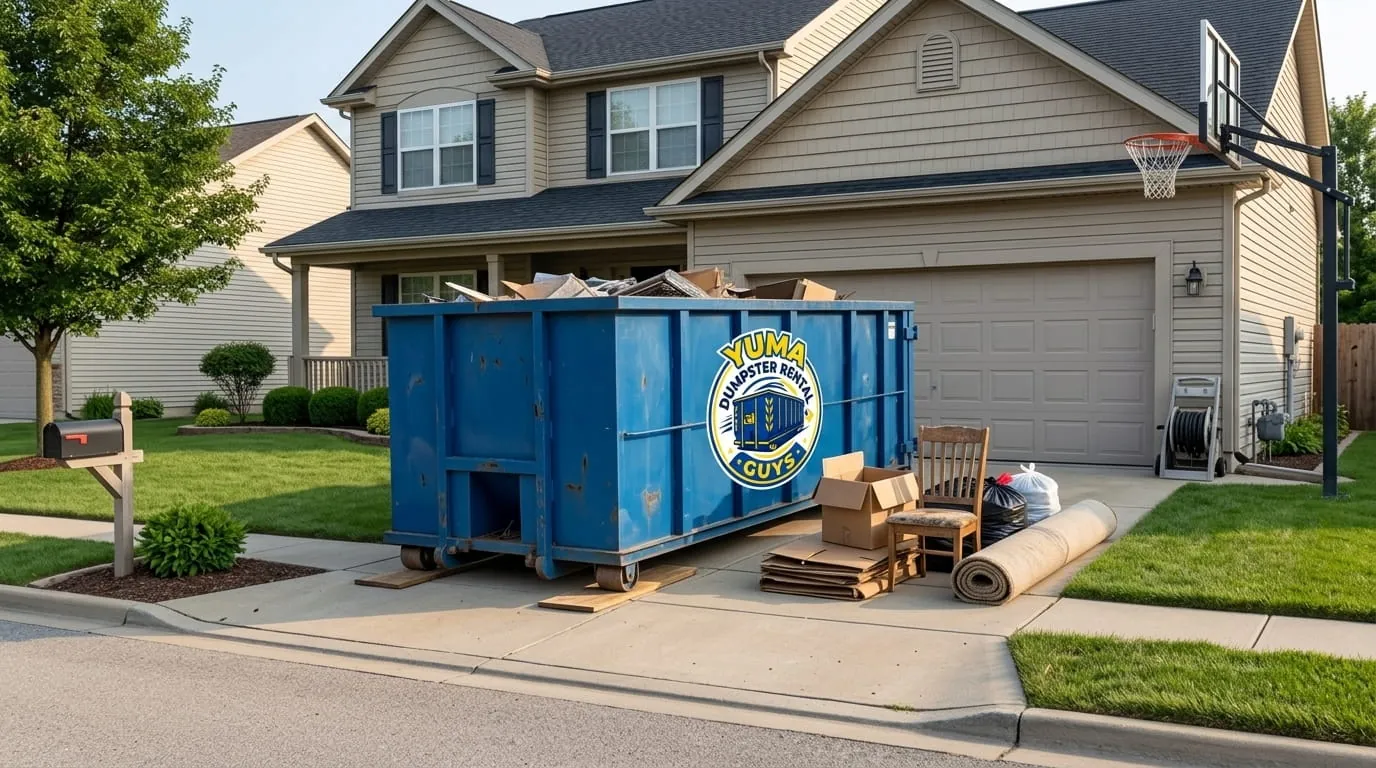
⭐ Yuma yards are not what the advice assumes
Almost every article written about yard waste and dumpsters assumes a lawn, a deciduous tree and a season of leaves. None of those describe a typical Yuma property.
That produces two categories of yard work that behave in completely opposite ways, and getting them mixed up is the most common sizing mistake in this market. Rock is extremely heavy and takes almost no space. Palm and grove waste is extremely bulky and weighs almost nothing. Put them in the same container and you get the worst of both.
Rock is the heaviest thing you will ever load
People know concrete is heavy. Very few people realize that the decorative rock in their front yard is in the same league.
Decomposed granite and landscape rock run in the region of a ton and a quarter to a ton and a half per cubic yard, depending on the size of the material and how much moisture is in it. Finer material packs tighter and weighs more. Material that has been watered weighs more again.
Put that next to a roll-off's limits and the arithmetic is unforgiving. A container that looks barely used — rock spread across the floor and part way up the walls — can already be at the weight a truck is allowed to lift.
⚠️ This is why a front-yard rock removal is almost never a single large container. It is usually a small container, filled part way, possibly more than once. Anyone who tells you to put the rock from a whole front yard into one 30 yard box has not weighed it.
⚠️ Doing the arithmetic before you order
You can estimate this yourself in about a minute, and it is worth doing.
Measure the area in feet. Estimate the depth of the rock — most decorative installations are two to three inches, though it builds up over the years. Multiply length by width by depth in feet, then divide by twenty-seven to get cubic yards.
A forty by twenty foot front yard at three inches deep is eight hundred square feet at a quarter of a foot, which is two hundred cubic feet, which is a little over seven cubic yards. At roughly a ton and a quarter per yard, that is around nine tons of material.
Do the measurement before you call and the sizing conversation takes thirty seconds instead of ten minutes of guessing.
Artificial turf, pavers and the rest of the hardscape
Rock is the heavy extreme, but it is not the only hardscape coming out of Yuma yards.
Artificial turf is bulky, awkward and moderately heavy, especially with sand or rubber infill still in it. Rolling it tightly makes an enormous difference to how much fits, and shaking out the infill first reduces the weight considerably. Both are worth the effort.
Pavers and flagstone are concrete or stone and should be treated exactly like rock. Heavy, small-container, part-filled.
Block and concrete edging the same.
Irrigation and drip line is light, stringy and tangles around everything. It loads better if it is cut into lengths rather than going in as one enormous nest.
Shade sails, ramadas and patio structures are bulky and light, so they belong with the green waste category rather than the rock one as far as sizing is concerned.
⭐ Palm fronds: the opposite problem
Having established that rock is denser than anyone expects, palm is the mirror image, and it is just as badly estimated.
A mature palm produces a startling volume of frond, and fronds do not pack. They are long, rigid, awkwardly shaped and full of air. A pile of fronds that looks like it would fill a pickup bed will comfortably fill several, and a three-tree trim that sounds like a morning's tidying routinely fills a 20 yard container.
Two things help, and both are worth doing:
Cut them down. Fronds cut into shorter lengths pack dramatically better than whole ones. This is the single highest-return thing you can do on a palm job, and the difference is not marginal.
Load as you go. Fronds loaded straight into the container, stacked rather than thrown, take far less room than a heap that is bulldozed in at the end.
⚠️ Watch the top rail. Fronds spring back, and a container that was level when you walked away can be proud of the rail an hour later. It still cannot travel like that.
Lemon, date and citrus grove prunings
On the Yuma Mesa and out through the valley, grove waste is its own steady category.
Citrus and lemon prunings are dense, woody and thorny. They are heavier than ornamental prunings and considerably less pleasant to handle — gloves and long sleeves, even in the heat.
Date palm material is the extreme case of the frond problem: very large, very rigid, and with fronds that have genuinely sharp spines at the base. Cutting them down to length is not optional on a date job; it is the only way to load them safely.
Mesquite is dense hardwood. A mesquite removal produces a load far heavier than its volume suggests, more like a timber load than a green one, and the thorns are serious.
Stumps are worth asking about separately. A stump with soil and rock still attached is a weight problem rather than a green waste one, and it is usually better knocked clean before it goes in.
⚠️ Keeping a green load clean enough to be cheap
A load of nothing but green waste is simpler and cheaper to dispose of than the same material mixed into general debris. Copper Mountain accepts green waste, and so do the county transfer stations for residents hauling their own.
“Clean” here means genuinely clean:
Plant material only. No bags — empty them and take the plastic out. No pots, no trays, no irrigation fittings, no wire, no weed fabric, no rock. The weed fabric one catches a lot of people, because it comes out of the ground attached to the plants it was supposed to suppress.
⚠️ And the big one in this market: no rock. If you are redoing a yard, the rock comes out and the plants come out and it is tempting to put them in the same box. Do not. One load of clean green and one small load of rock is cheaper, easier to load and easier to dispose of than one mixed container that is both overweight and contaminated.
In summer there is one more reason to keep a green load clean and short: it decomposes. A sealed steel container of soft green material in August begins to turn within a couple of days.
Sizing a Yuma yard job properly
Put it together and the rule is simple enough to remember.
Rock, pavers, block, flagstone, wet soil: small container, part-filled, expect more than one. Weight decides everything.
Palm, grove prunings, brush, shade structures, turf: large container, filled to the rail. Volume decides everything, and cutting material down is the lever that matters.
Both on the same job: two containers, or two loads in sequence. It genuinely works out cheaper, and it is the recommendation we give most often on a yard conversion.
Measure the rock area before you call, count the palms, and say which of the two problems you actually have. That is all we need to get it right first time.
Need a container in Yuma?
Call and describe the job. Three minutes on the phone gets you a size recommendation, a flat rate and a delivery window — and we will tell you if a smaller, cheaper container is the right answer.
Call (928) 248-1057